327 Central Prk W #1C, New York, NY 10025


A playground fall, an unexpected toothache, a chipped tooth during a meal, or an injury during sports can quickly turn an ordinary day into a stressful one. When your child is hurt, it is natural to wonder what happened, whether the tooth can be saved, and what the dentist may need to do next.
The reassuring part is that not every dental emergency leads to an extensive procedure. The appropriate care depends on what happened, the severity of the injury, and whether a primary or permanent tooth is involved.
For families looking for emergency pediatric dentistry in New York, understanding the possible next steps can make an unexpected situation easier to navigate. At Central Park West Pediatric Dentistry, Dr. Mohammad Amin Koshnevisan and the team provide guidance and prompt care when children experience urgent dental problems.
Here is what New York parents should know about the emergency dental care and procedure options that may be considered after a child’s oral mishap.
What Happens During a Pediatric Emergency Dental Visit?
Emergency care does not begin by immediately performing a procedure. First, the dental team needs to understand what happened and evaluate the affected area.
We explain that during a dental emergency, the initial priorities include relieving pain, controlling bleeding when necessary, and examining the injury. Based on the findings, the dentist can determine an appropriate course of treatment, which may include repairing, repositioning, or protecting an affected tooth.
The appropriate approach can vary considerably from one child to another. A small fracture, for example, is different from a permanent tooth that has been completely knocked out.
That is why calling the pediatric dental office promptly is important. Parents can receive guidance about what to do before arriving and whether immediate evaluation is necessary.
Which Emergency Dental Procedure or Care Might Your Child Need?
Parents often search for a specific procedure as soon as an accident happens. However, pediatric dental emergencies are treated according to the type and extent of the problem.
Here are several situations discussed and what parents can expect from emergency care.
Care for a Chipped or Broken Tooth
A chipped or broken tooth deserves timely attention, particularly if your child is experiencing pain or sensitivity.
Before reaching the dental office, parents should gently rinse the child’s mouth with warm water and place a cold compress on the outside of the face if swelling is present. If you can locate pieces of the broken tooth, save them in milk or saline and bring them to the appointment.
At the dental office, the injury can be evaluated to determine how much of the tooth has been damaged and what type of care it requires. Depending on the individual injury, the affected tooth may need to be repaired or protected.
Until your child has been evaluated, avoid hard foods and very hot or cold foods that could aggravate the injured area.
Emergency Care for a Knocked-Out Permanent Tooth
A knocked-out permanent tooth is one situation where every minute matters.
The American Academy of Pediatric Dentistry-endorsed trauma guidelines emphasize prompt and appropriate emergency management for avulsed permanent teeth.
If you can find the tooth:
- Pick it up by the crown, not the root.
- If dirty, gently rinse it with milk or saline without scrubbing.
- When possible, place the permanent tooth back into its socket and have the child gently bite on clean gauze or cloth.
- If you cannot reinsert it, keep it in milk, saliva, or saline.
- Do not allow the tooth to dry out.
- Seek emergency dental care immediately.
We note that the most favorable outcomes occur when a permanent tooth is replaced quickly, ideally within about 30 minutes.
There is one particularly important distinction for parents: do not attempt to replant a baby tooth. Primary and permanent tooth injuries are managed differently, and guidelines endorsed by the American Academy of Pediatric Dentistry also advise against replanting an avulsed primary tooth.
Evaluation and Care for a Sudden Toothache
A toothache may begin gradually or seem to appear without warning. Either way, persistent pain deserves attention because the source cannot always be identified simply by looking inside your child’s mouth.
Before the appointment, gently clean around the affected tooth. We recommend having the child rinse with warm salt water to help remove food particles that may be caught between the teeth.
If facial swelling occurs, a cold compress can be placed against the outside of the cheek.
Never place aspirin directly against your child’s tooth or gums.
A dental evaluation can identify the source of the discomfort and determine what care is appropriate. This is especially important when the pain is significant, persistent, associated with swelling, or interferes with eating and chewing.
Care for a Cut Lip, Tongue, or Cheek
Oral soft tissues can bleed significantly after a fall, accidental bite, or other injury. Although the amount of blood can alarm parents, many minor soft-tissue injuries can initially be managed with basic first aid.
Gently rinse the area with water and apply a cold compress for swelling. If bleeding is present, place clean gauze or cloth against the area and maintain gentle, firm pressure for approximately 10 to 15 minutes.
If bleeding has not stopped after about 15 minutes or the wound appears deep, we recommend going to the nearest emergency room or contacting the pediatric dentist immediately.
Parents should also watch the injured area over the following days for increasing pain, redness, or pus.
What If Your Child Breaks a Brace or Wire?
A broken orthodontic appliance may be uncomfortable, especially when a wire or bracket begins rubbing against the cheek or gums.
Do not attempt to pull out a wire or bracket that is stuck or causing discomfort.
Instead, a sharp or irritating area can temporarily be covered with orthodontic wax, gauze, or sugarless gum. If part of the appliance has completely detached and can be removed easily without causing pain, it can be taken out and brought to the appointment.
Even without significant pain, parents should contact their child’s orthodontist to find out whether the appliance requires repair.
Does Emergency Treatment Differ for Baby and Permanent Teeth?
Yes. This is one of the most important things parents should understand during a pediatric dental emergency in New York.
Primary teeth and permanent teeth do not always receive the same emergency management. Research-based dental trauma guidelines specifically recognize that injuries involving primary teeth can require a different approach from injuries involving permanent teeth.
The clearest example is a knocked-out tooth.
A permanent tooth may need immediate replantation and emergency professional care. A baby tooth should not be replanted because doing so could potentially affect the developing permanent tooth beneath it.
If you are unsure whether the injured tooth is primary or permanent, do not guess. Contact the pediatric dental office and explain what happened so you can receive appropriate instructions.
When Should a Child Go to the Emergency Room?
Some oral injuries require medical emergency care rather than, or in addition to, a dental visit.
For example, we advise seeking emergency room care when a cut to the tongue, lip, or cheek is deep or when bleeding does not stop after 15 minutes of firm, gentle pressure.
Parents should also prioritize emergency medical attention when a dental accident is accompanied by a potentially serious non-dental injury.
If you are uncertain about an isolated dental problem, contacting your pediatric dentist promptly can help you understand the appropriate next step.
How Can You Help an Anxious Child During a Dental Emergency?
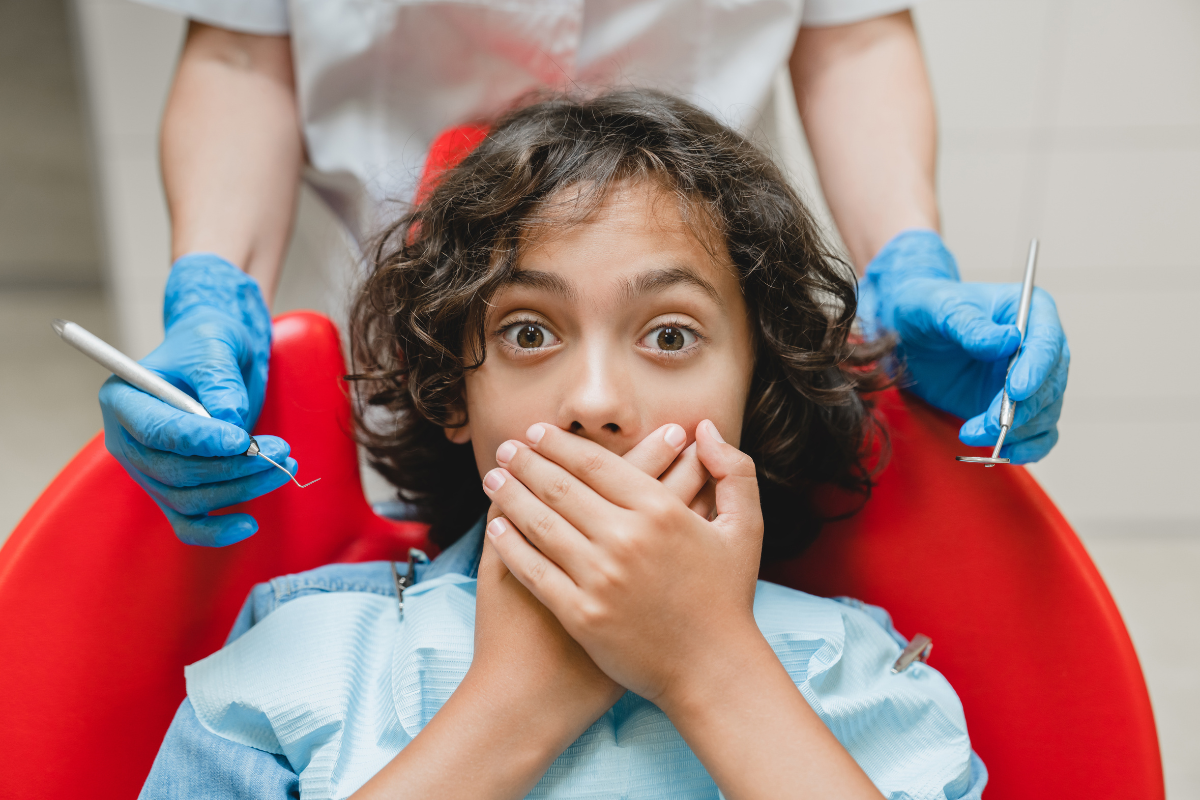
A dental accident can be frightening for children. Pain, blood, an unfamiliar sensation in the mouth, or seeing part of a tooth missing can make the situation feel even more alarming.
How parents respond can influence how a child reacts.
Try to:
- Remain calm while assessing what happened.
- Reassure your child without making promises about what treatment will be necessary.
- Follow the pediatric dental team’s instructions.
- Keep the injured area clean without repeatedly touching it.
- Bring broken tooth fragments or a knocked-out permanent tooth with you when appropriate.
- Explain that the dentist will look at the injury and determine how to help.
You do not need to diagnose the problem yourself. Your priority is to protect your child, provide appropriate first aid, and seek professional guidance.
Why Prompt Pediatric Dental Care Matters After an Injury
Waiting to see whether a dental injury improves on its own is not always the right approach.
A broken tooth, significant toothache, uncontrolled bleeding, or knocked-out permanent tooth can require prompt assessment. Early evaluation allows the pediatric dentist to understand the extent of the problem and determine whether the tooth needs to be repaired, repositioned, protected, or otherwise managed.
Timely care is particularly critical following avulsion of a permanent tooth because the way the tooth is handled and the time between the accident and professional care can influence the outcome.
That is why knowing where to turn for emergency pediatric dentistry in New York before an accident happens can be valuable for parents.
Be Prepared Before a Pediatric Dental Emergency Happens
Parents cannot prevent every fall, sports accident, or unexpected toothache. They can, however, prepare for them.
Keep your pediatric dentist’s phone number accessible. Have clean gauze and a cold compress available at home. If your child participates in sports, ask about appropriate mouth protection. Regular dental visits can also provide opportunities to identify oral health concerns before they become more serious.
Most importantly, learn the few situations where immediate action is especially important, such as a knocked-out permanent tooth or bleeding that will not stop.
Being prepared does not mean you need to know how to treat the injury yourself. It means knowing what not to do, what immediate steps can protect your child, and whom to call next.
Need Emergency Pediatric Dental Care in New York? Call Us
When your child is hurt, you want clear answers and care centered on their immediate needs.
Dr. Mohammad Amin Koshnevisan and the team at Central Park West Pediatric Dentistry are available to guide families through urgent dental situations and provide prompt care when needed. Whether your child develops a painful toothache, chips or breaks a tooth, experiences a soft-tissue injury, or knocks out a permanent tooth, contacting the office promptly can help you determine the appropriate next step.
If your child is experiencing a pediatric dental emergency in New York, schedule a consultation for guidance and urgent dental care.
Do not wait until an oral mishap happens to decide where to turn. Keep the practice’s number accessible so you can act quickly when your child’s smile needs attention.
Frequently Asked Questions
- Will every pediatric dental emergency require a procedure?
No. The care your child requires depends on the type and severity of the problem. We explain that emergency care begins by addressing pain and bleeding and evaluating the injury. The dentist can then determine whether the affected tooth needs repair, repositioning, protection, or another appropriate course of care.
- What should I bring to my child’s emergency dental appointment?
If your child has broken a tooth, bring any fragments you can locate. The practice recommends storing broken pieces in milk or saline. If a permanent tooth has been knocked out and cannot be reinserted, keep it moist in milk, saliva, or saline while seeking immediate care.
- Can a knocked-out baby tooth be put back into its socket?
No. Parents should not replant a knocked-out primary tooth. This differs from a knocked-out permanent tooth, for which immediate action may help preserve the tooth. If you are unsure whether the tooth is primary or permanent, contact your pediatric dentist immediately.
- What should I do if my child’s mouth keeps bleeding after an injury?
Place clean gauze or cloth over the injured area and apply gentle, firm pressure for approximately 10 to 15 minutes. If bleeding does not stop after about 15 minutes or the wound appears deep, seek emergency room care or contact your pediatric dentist immediately.
- Should I save the piece if my child breaks a tooth?
Yes, if you can find it. It is recommended to place broken tooth fragments in a clean container with milk or saline and take them with you for professional evaluation.
- Can a broken orthodontic wire wait if my child is not in pain?
You should still contact your child’s orthodontist. In the meantime, an irritating edge may be temporarily covered with orthodontic wax, gauze, or sugarless gum. Do not attempt to remove a wire or bracket that is stuck or causing discomfort.
- How can New York parents prepare for a child’s future dental emergency?
Keep your pediatric dentist’s contact information readily available and basic supplies such as clean gauze and a cold compress at home. Parents should also know the immediate steps for common injuries, especially the difference between handling a knocked-out baby tooth and a knocked-out permanent tooth. Being prepared can make it easier to act calmly and contact the appropriate dental or medical professional when an emergency occurs.