327 Central Prk W #1C, New York, NY 10025


Many parents in New York City feel anxious when their child needs a dental procedure that requires sedation. You want your child to be safe, calm, and comfortable, and you want to know exactly what happens at every step. Understanding the process removes the guesswork and helps you prepare confidently.
This guide covers what parents need to do before the appointment, what takes place during the procedure, and how to care for your child at home afterward.
If you are looking for a kids’ sedation dentist in New York, Central Park West Pediatric Dentistry, led by Dr. Robert Peracchia, provides thoughtful, child-centered care for families across New York City. The team uses a calm, communication-first approach that helps children and parents feel informed at every stage.
Meet Dr. Robert Peracchia

Dr. Robert Peracchia is a Diplomate of the American Board of Pediatric Dentistry and has provided pediatric dental care since 1998. He earned his dental degree from the University of Western Ontario and completed post-graduate residencies at the University of Washington and Lutheran Medical Center in Brooklyn.
He holds a faculty position at Columbia University’s School of Dental Medicine. He has a hospital appointment at Columbia Presbyterian Hospital, where he treats children requiring general anesthesia in a children’s hospital operating room. He also serves as an Attending Clinical Professor for the NYU College of Dentistry Global Student Outreach Program. Contact us now to book your consultation.
Why Some Children Need Help Staying Calm During Dental Work
Not every child can sit still through a dental procedure. Young children, kids with dental anxiety, and those with special health care needs often struggle to cooperate in a dental chair. When a child cannot stay still, completing treatment safely becomes difficult, and incomplete treatment leads to bigger problems down the line.
Dental teams use calming agents and, when needed, stronger options to help children receive the care they need without distress. The goal is always to complete treatment effectively while keeping the child comfortable and safe. Pediatric dentists evaluate each child individually and recommend only what the child’s specific situation requires.
The right approach depends on the child’s age, emotional maturity, level of anxiety, and the extent of dental treatment needed.
Types of Calming Options Used in Pediatric Dentistry
Nitrous Oxide (Laughing Gas)
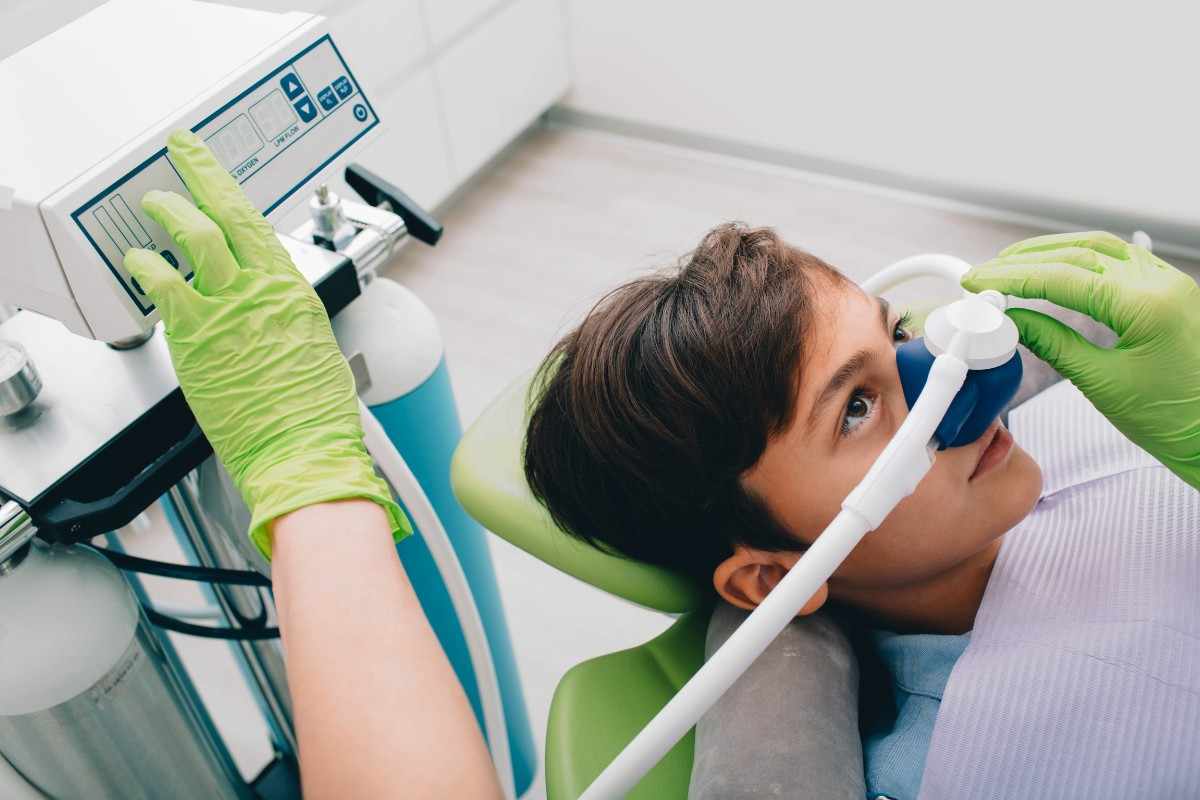
Nitrous oxide is a mild gas that children breathe through a small mask placed over the nose. It produces a relaxed, slightly euphoric feeling within minutes. The child stays awake and can follow instructions. The effects wear off quickly after the mask comes off, so children typically return to normal activity the same day. Many pediatric dentists use this as a first-line option for mild to moderate anxiety.
What to Do Before the Appointment
Preparation makes the day of the procedure far smoother. The dental team gives you specific instructions based on the type of care your child receives, but here are the most important steps that apply broadly.
Before the Day of the Procedure
- Share your child’s complete health history, including medications, allergies, and recent illnesses, with the dental team.
- Ask the dentist to walk you through what will happen so you can explain it to your child in calm, simple terms.
- Arrange for a trusted adult to drive your child to and from the appointment — this is mandatory when sedation is involved.
- Keep your child away from anyone who is sick. Report any illness to the dental office right away, as illness may require rescheduling.
- If general anesthesia is required, the team requires a health and physical assessment within the week before the procedure.
The Night Before and Morning of the Appointment
- Follow all fasting instructions from the dental team. For general anesthesia, children must not eat or drink for a set number of hours before the procedure; this is a strict safety rule.
- Dress your child in comfortable, loose-fitting clothing.
- Bring a favorite stuffed animal or comfort item to help your child feel at ease in the waiting area.
- Stay calm yourself; children pick up on parental anxiety. A relaxed parent helps a child feel safe.
- Arrive at the office on time or a few minutes early to complete any remaining paperwork without rushing.
What Happens During the Appointment
The dental team monitors your child’s vital signs throughout the procedure. A trained pediatric dental team follows strict safety protocols at every stage. Parents typically wait in the reception area while the procedure takes place, as a calm environment helps the clinical team focus on the child.
The dentist completes all necessary treatment during the appointment, which minimizes the number of visits your child needs for dental work. After the procedure, the team monitors your child in a recovery area until they are alert enough to leave safely.
As one happy parent shared—
We’ve been seeing Dr. Rob for a few years, and our experience with him and all his staff is always great. They are patient, caring, and knowledgeable. They take amazing care of my son! – F. Fioretti
We invite you to read our Google reviews and hear directly from patients who have trusted us with their smiles.
What to Expect After the Appointment — and How to Help at Home
Recovery depends on the type of calming method used. Children who receive nitrous oxide alone typically feel normal within minutes of the mask coming off. Children who receive oral medication or general anesthesia need more rest and monitoring at home.
Immediate Post-Appointment Care
- Keep your child resting in a reclined or lying position in the car on the way home; never let them sit unsupported if they are still groggy.
- Expect drowsiness, fussiness, or grogginess for several hours. This is normal and expected.
- Start with small sips of clear fluids once your child is alert enough to swallow safely. Move to soft foods gradually.
- Keep your child away from stairs, pools, and play equipment until they are fully alert and steady on their feet.
- Do not give your child any additional medications without first speaking to the dental team.
The Rest of the Day and the Next Morning
- Plan for a quiet day at home, skip daycare, school, and sports for the rest of the day.
- Offer soft, easy-to-chew foods: yogurt, mashed potatoes, scrambled eggs, and applesauce work well.
- Watch for any unusual symptoms, such as persistent vomiting, prolonged drowsiness, or difficulty breathing, and contact the dental office immediately if they arise.
- Most children feel completely back to normal the following morning and can return to school and regular activity.
- Follow any specific aftercare instructions the dental team gives you; these take priority over general guidelines.
Questions to Ask the Dental Team Before You Agree to Treatment
You have every right to ask questions before any procedure. A trustworthy dental team welcomes them. Here are some worth asking during your consultation:
Ask the dentist to explain why the recommended option is appropriate for your child’s age, health, and the scope of treatment. Ask who administers and monitors the medication. Ask what qualifications that person holds. Ask what happens if your child reacts unexpectedly. Ask what specific aftercare steps your child will need. The clearer your understanding before the appointment, the more confident you will feel on the day.
Many parents who search for a children sedation dentist in New York find that the most important factor is clear, honest communication from the dental team, not just credentials alone. A team that answers your questions patiently and thoroughly is one you can trust.
Ready to Take the Next Step? Contact Central Park West Pediatric Dentistry
You now know what to expect before and after a dental procedure that uses calming agents for your child. The right dental team makes the entire process clear, safe, and manageable for both parent and child.
At Central Park West Pediatric Dentistry, Dr. Peracchia and his team take the time to explain every step, answer every question, and ensure your child receives the care they need in a setting designed for children. Parents throughout Manhattan, the Upper West Side, and the surrounding neighborhoods of New York City trust this practice for complex pediatric dental care. Call the office today to schedule your child’s consultation.
Frequently Asked Questions
At what age can a child receive dental sedation?
Age is one of several factors a pediatric dentist considers, along with emotional maturity, health history, and the extent of treatment needed. The dentist evaluates each child individually before making recommendations. Schedule a consultation to discuss what is appropriate for your child.
Is dental sedation safe for children with medical conditions?
Children with certain medical conditions require additional evaluation before any calming agent is used. A thorough health history review and sometimes a medical clearance from a physician are part of the process. Your dentist will guide you through every requirement specific to your child’s condition.
How long does recovery take after a dental procedure with sedation?
Recovery time depends on the type used. Nitrous oxide clears within minutes. Oral medication may cause grogginess for several hours. General anesthesia requires more rest, and most children feel fully normal by the following morning. The dental team gives you a specific recovery timeline at discharge.
Can my child eat or drink before the procedure?
Fasting requirements depend on the type of procedure and calming method used. For general anesthesia, strict fasting rules must be followed for safety. The dental team provides written instructions ahead of the appointment — follow those instructions exactly.
What should I do if my child vomits after the procedure?
Some nausea is normal in the hours following certain procedures. Keep your child upright, offer small sips of clear fluid once they are alert, and avoid solid food until the nausea passes. If vomiting is persistent or your child shows signs of distress, contact the dental office right away for guidance.
Will my child feel any pain during the procedure?
One of the primary goals of using calming agents is to ensure the child does not experience pain during treatment. The dentist also uses a local anesthetic to numb the treatment area. Your dental team prioritizes your child’s comfort and monitors them continuously throughout the procedure.
How do I know if my child actually needs this type of dental care?
The dentist recommends this type of care only when it is genuinely in the child’s best interest — for example, when anxiety prevents safe treatment or when the dental needs are extensive. A consultation appointment gives the dentist the information needed to make that recommendation and gives you the chance to ask all your questions before deciding.